

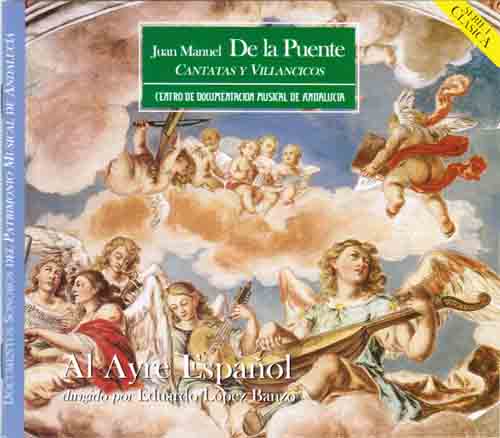
Juan Manuel de la Puente
Cantatas y VillancicosAl Ayre español
Conductor: Eduardo López Banzo
JUAN MANUEL DE LA PUENTE (1692-1753) CANTATAS Y VILLANCICOS Two factors point to Juan Manuel de la Puente as one of the great choirmasters of Jaén Cathedral: his extensive musical work, largely preserved in the Cathedral itself and the interest shown him by musicologists such as Robert Stevenson who said of him "...a credit to the church of Jaén, may his memory live on to be elevated to the place of preference it deserves..." De la Puente was born in Tomelloso (Guadalajara) in 1692 and died in Jaén itself, in 1753. His early years were spent at his birthplace...+ info
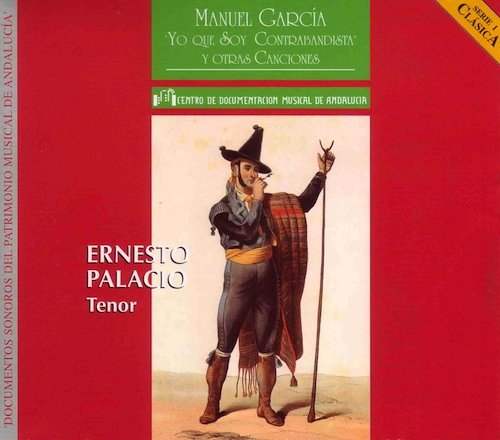
Yo que soy contrabandista
Manuel GarcÃaErnesto Palacios
THE SONGS OF MANUEL GARCIA Manuel del Pópulo Vicente García can only be considered a legend in his own time. A nineteenth century legend in the widest sense of the word. A century and a half ago, the stars of the Italian bel canto (both composers and singers), the German symphonic and Polish and Bohemian piano schools were highly revered and it was in Paris that they consummated their international acclaim. However in the Paris of the 1830's, Spanish music was also revered, and, in general, all that originated in Spain's period of fiery Romanticism. Paris was also where the Sev...+ info
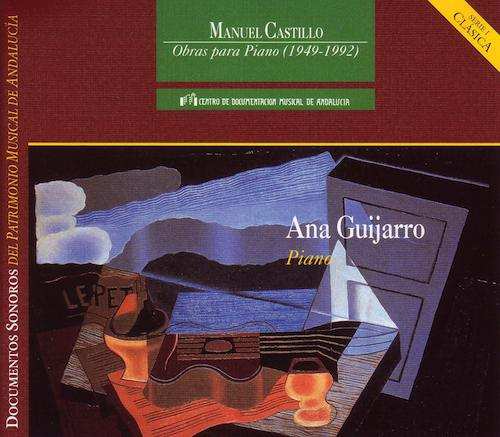
Obras para Piano (1949-1992)
Manuel CastilloAna Guijarro
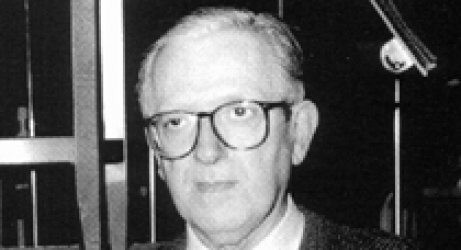
MANUEL CASTILLO He was born in Sevilla in 1930. He was a student to A. Pantión and N. Almandoz, to A. Lucas Moreno y Conrado dei Campo in Madrid; to Lazare Levy and Nadia Boulanger in Paris. From 1995 he has worked as Professor of Piano and later on of Composition in the Conservatory "Manuel Castillo" of Sevilla, of which he was the headmaster from 1964 to 1978. Among the Prizes he has been awarded the most outstanding ones are the following: "Joaquín Turina", "Nacional de Música" 1959; "Manuel de Falla" (1975) and other granted for his choral works. In 1976 he was giv...+ info
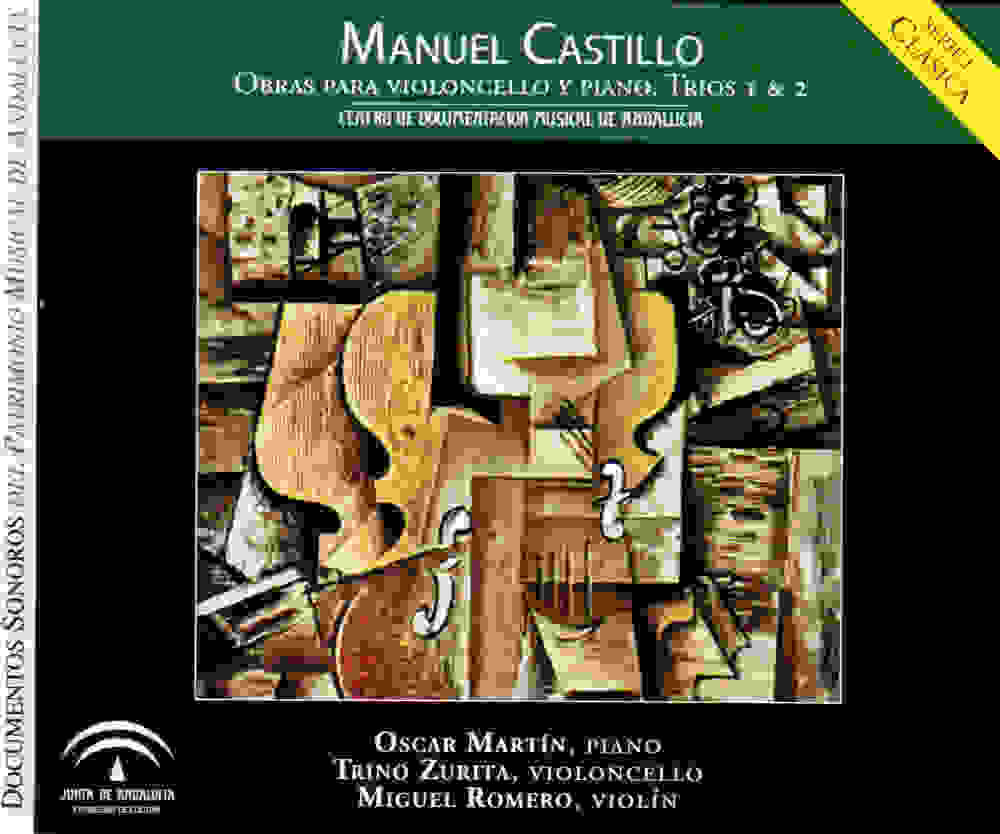
Nuevo Disco: OBRAS PARA VIOLONCELLO Y PIANO. TRÃOS 1 Y 2. MANUEL CASTILLO
Almaviva
Almaviva aims to highlight the workof such illustrious Andalusians as Manuel de Falla and Joaquín Turina.
Edited
Junta de Andalucía. Consejería de Cultura
Coordinated
Centro de Documentación Musical de Andalucía
Produced
Agencia Andaluza de Instituciones Culturales
+ More
New in Almaviva
See the latest Almaviva.
Go to News
Buy our records
Shop in Almaviva all disks of our artists.
Simply access the Online Purchase section and select the disks you want.
In short time you will receive in your home.
Go to online Shopping